
الاتصال الناعم مقابل الاتصال الصلب لشاشة LED
الاتصال الناعم مقابل الاتصال الصلب لشاشة LED، أيهما أفضل؟ اكتشف جميع المعلومات حول المزايا والعيوب.
الوصلة الناعمة مقابل الوصلة الصلبة: أيهما الأنسب لشاشة LED الخاصة بك؟
عند الحديث عن بناء شاشة LED عالية الجودة، يبقى الهدف دائمًا هو توفير تجربة بصرية سلسة وخالية من العيوب. فهذا لأن الشاشة المنتظمة والمستقرة تضمن أن يظهر محتواك في أفضل صورة. وبما أن كلا طريقتي الوصلة الناعمة والصلبة مصممتان لربط وحدات LED معًا، يتساءل كثير من المثبتين ومديري المشاريع عن أيهما الأفضل.
بفضل خبرتي الواسعة في صناعة شاشات LED، شهدت من خلال الخبرة المباشرة كيف تؤثر هاتان التكنولوجيتان للوصلات على النتيجة النهائية للمشاريع، بدءًا من سرعة التثبيت وصولاً إلى المتانة طويلة الأمد.
لذا، في هذا المقال، سأساعدك على حسم الجدل حول الوصلة الناعمة مقابل الوصلة الصلبة بشكل حاسم، حتى تعرف بالضبط أيهما ستختار لمشروعك القادم بالأشعة تحت الحمراء.
هل أنت مستعد للبدء؟ لنبدأ.
في هذا المقال
- مقدمة إلى تقنيات وصلات شاشات LED
- ما هي الوصلة الصلبة لشاشة LED؟
- ما هي الوصلة الناعمة لشاشة LED؟
- اختيار القرار الصحيح: الوصلة الناعمة أم الوصلة الصلبة؟
- الخاتمة
مقدمة إلى تقنيات وصلات شاشات LED
كما نعلم جميعًا، كل شاشة LED كبيرة هي نظام من وحدات، يتكون من عدد كبير من الألواح أو الوحدات الأصغر التي يتم دمجها معًا لإنشاء سطح بصري موحد وسلس. الوصلات بين هذه الوحدات تؤدي وظيفتين أساسيتين: توفير هيكل فيزيائي مستقر، ونقل إشارات الطاقة والبيانات بدقة عبر الشاشة بأكملها.
بشكل عام، توجد نهجان مهيمنان لتحقيق ذلك: الوصلات الصلبة والوصلات الناعمة، ولكل منهما فلسفة هندسية مميزة.
ما هي الوصلة الصلبة لشاشة LED؟
أولاً، لنناقش الاتصال الصلب.
اتصال قوي تقنية، كما يوحي اسمها، تعتمد على هياكل ميكانيكية جامدة وثابتة. تخيّلها كنظام مصمم بدقة حيث يتم قفل الوحدات في مكانها باستخدام مكوّنات معدنية مثل دبابيس التمركز والبراغي والخطاطيم المتينة. يعطي هذا المنهج أولوية للسلامة الهيكلية والمحاذاة المثالية والاستقرار. في بعض الأحيان نسمي هذا الاتصال اتصالًا لاسلكيًا.
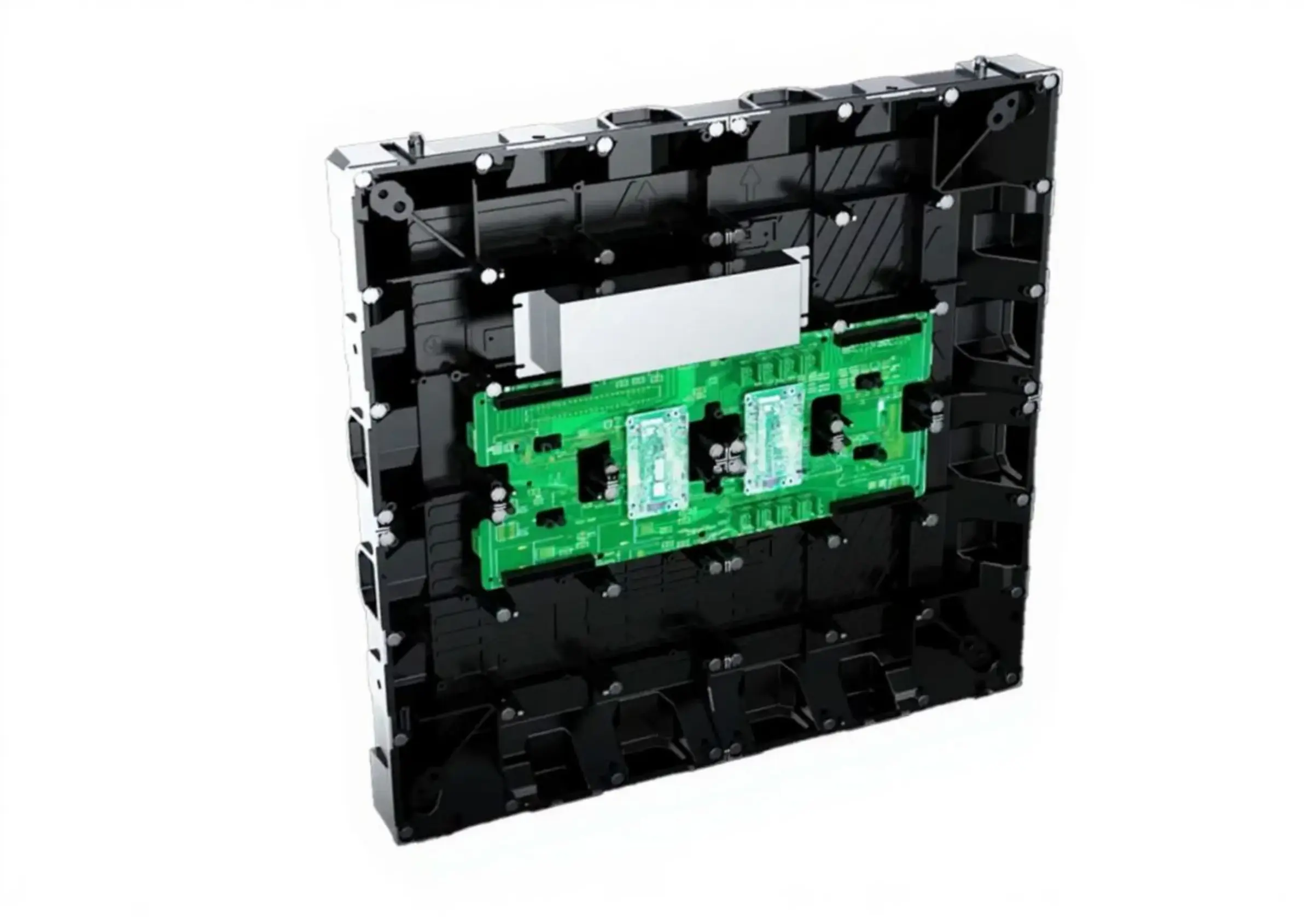
في نظام العرض السلكي الصلب، غالبًا ما تُدمج خطوط البيانات والطاقة في لوحة خلفية موحدة أو لوحة هاب، مما يقلل من الكابلات الفوضوية ويزيد من إنشاء إعداد نظيف ومتين.
المزايا والعيوب
فيما يلي جدول يلخص إيجابيات وسلبيات الاتصالات الصلبة لشاشات LED:
| المزايا | العُيوب |
|---|---|
| ثبات عالٍ | مرونة محدودة |
| توفر الاتصالات الصلبة رابطًا قويًا وآمنًا بين الوحدات، مما يقلل من الحركة وعدم المحاذاة. | غير مناسبة للتطبيقات التي تتطلب تعديلات أو نقلات متكررة. |
| المتانة | تكلفة أولية أعلى |
| أقل عرضة للتلف، مما يؤدي إلى انخفاض تكاليف الصيانة مع مرور الوقت. | أعلى تكلفة أولية بشكل عام مقارنة بالاتصالات الرخوة. |
| نقل إشارة مستقر | تكلفة صيانة إضافية |
| Ensures reliable data and power transmission with minimal interference. | Requires ongoing maintenance as LED modules can be less expensive, but the need for additional hub cards can increase overall costs. |
| تبريد ممتاز | Increased Module Replacement Cost |
| Rigid structure helps manage heat effectively, prolonging LED lifespan. | Replacement of individual modules and Hub board may incur additional costs due to the need for specialized components. |
| Precision Alignment | |
| Achieves high levels of flatness and alignment, essential for high-quality displays. | |
| تثبيت سهل | |
| Plug-and-play design simplifies setup and allows for front service access. | |
| Lightweight | |
| Generally lighter weight allows for easier handling and installation. | |
| Aesthetic Appeal | |
| Clean design with no complex wiring connections enhances visual appeal. |
ما هي الوصلة الناعمة لشاشة LED؟
اتصال خفيف technology takes the opposite approach, embracing flexibility. It utilizes power cables, flat data cables to link modules.
This method allows for a degree of movement and tolerance between modules, making it ideal for installations that are not perfectly flat or require a more forgiving assembly process.
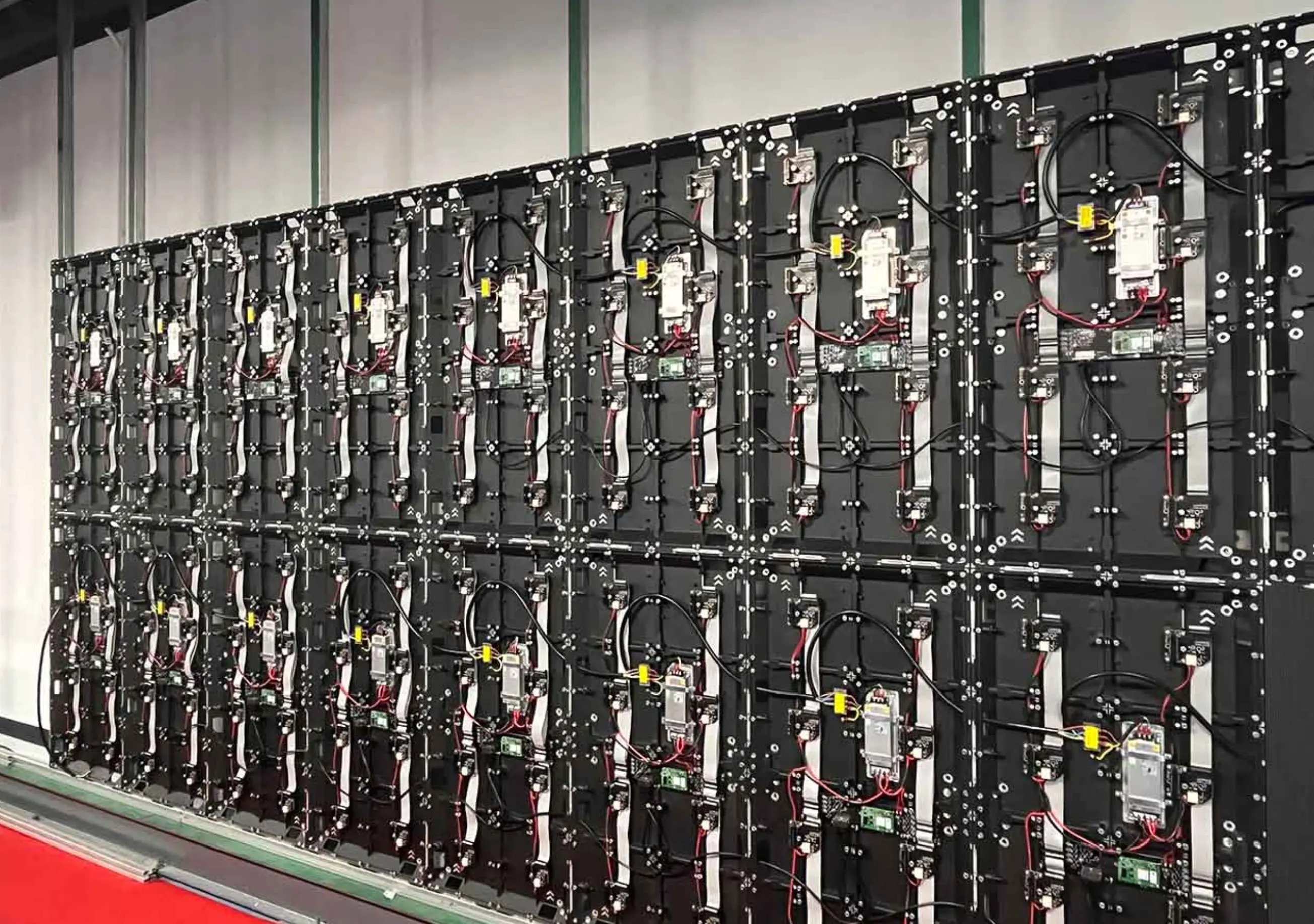
The soft connection of the LED screen is also called a wired connection.
المزايا والعيوب
| المزايا | العُيوب |
|---|---|
| Flexibility | Potential Signal Interference |
| Ideal for irregular or curved surfaces, allowing for creative designs. | May be more susceptible to signal interference, affecting performance. |
| Cost-Effective | Durability Concerns |
| Typically lower initial cost compared to hard connections. | More prone to damage over time, potentially increasing maintenance needs. |
| Lightweight Design | Complex Installation |
| Lighter weight can simplify handling and installation. | Installation may involve complicated cable connections between modules and receiver cards. |
| Modular Upgrades | Aesthetic Issues |
| Easier to replace or upgrade individual modules without major disruption. | Can appear messy with tangled wires, leading to a less tidy look. |
اختيار القرار الصحيح: الوصلة الناعمة أم الوصلة الصلبة؟
Now, we have understood all the pros and cons. You might wonder: Soft Connection or Hard Connection? Which should I choose?
Generally, choosing between a hard and soft connection requires a careful evaluation of the project’s specific needs, balancing factors like visual quality, installation environment, usage duration, and budget.
When deciding between soft and hard connections for LED displays, consider the following factors:
تعقيد التثبيت
- HardConnections: Generally easier to install, requiring fewer tools and less technical expertise. Ideal for quick setups.
- Soft Connections: A more complex installation process that may require specialized tools and skills. This can lead to longer setup times.
Application Scenarios:
- Soft Connections: Best suited for irregular or curved surfaces where flexibility is essential. They allow for creative designs and easier adjustments.
- Hard Connections: More appropriate for stable environments, control roomss, conference room where high durability and stability are critical, such as permanent installations in commercial settings.
Visual Quality:
- Soft Connections: May offer less precision in alignment, potentially affecting the overall visual quality. However, they can adapt to various design needs.
- Hard Connections: Provide superior flatness and alignment, resulting in higher visual quality, especially for high-resolution displays.
Budget:
- Soft Connections: Typically lower initial costs, making them a cost-effective choice for budget-conscious projects.
- Hard Connections: Higher upfront costs, but may lead to lower maintenance expenses over time due to their durability and stability.
الخاتمة
In this post, we explored the basic concepts and key considerations for choosing between soft and hard connections for LED displays.
If you’re unsure which option is best for your project, we encourage you to evaluate your specific requirements and priorities. For further assistance or to discuss your project in detail, please feel free to تواصل معنا. We’re here to help you make the right choice for your LED display needs!
For installation planning alongside module connections, compare front versus rear service access و rental versus fixed display setups.
مقالات ذات صلة