
LEDディスプレイのソフト接続とハード接続の違い
LEDディスプレイのソフト接続とハード接続、どちらが優れていますか?利点と欠点に関するすべての情報をご覧ください。
ソフト接続 vs ハード接続:LEDディスプレイにはどちらが最適か?
高品質なLEDディスプレイの構築において、その目標は常に完璧でシームレスなビジュアル体験です。均一で安定した画面は、コンテンツの最高の見え方を保証するからです。ソフト接続とハード接続の両方がLEDモジュールの結合を目的として設計されているため、多くの設置業者やプロジェクトマネージャーは、どちらが優れているかを問い合わせています。
LEDディスプレイ業界での広範な経験を生かし、これらの2つの接続技術がプロジェクトの最終結果にどのように影響するかを、設置速度から長期的な耐久性まで第一線で実感してきました。
そこで、この記事では、ソフト接続 vs ハード接続の論争に一度だけ決着をつけ、次回のプロジェクトでどの接続法を選択すべきかを正確に把握いただけるようお手伝いします。 LEDディスプレイ.
準備はできましたか? 始めましょう。
この記事の内容
LEDディスプレイ接続技術の紹介
ご存じのように、大規模なLEDディスプレイはすべてモジュールシステムで、多数の小さなパネルまたはモジュールが結合して、単一のシームレスなビジュアルキャンバスを作成します。これらのモジュール間の接続は、主に2つの機能を提供します。安定した物理構造を提供することと、電源およびデータ信号を画面全体に正確に伝送することです。
一般的に、これを達成するには、ハード接続とソフト接続という2つの主要なアプローチがあり、それぞれに異なるエンジニアリングの思想があります。
LEDスクリーンのハード接続とは?
まず、ハード接続について説明します。
ハード接続 その名の通り、この技術は堅牢で固定された機械的構造に依存しています。これは、ポジショニングピン、ネジ、そして堅牢なクランプといった金属部品によってモジュールが固定される、精密に設計されたシステムと考えると理解しやすいでしょう。この方法は、構造の耐久性、完璧なアライメント、そして安定性を最優先としています。時には、この接続を「 有線接続.
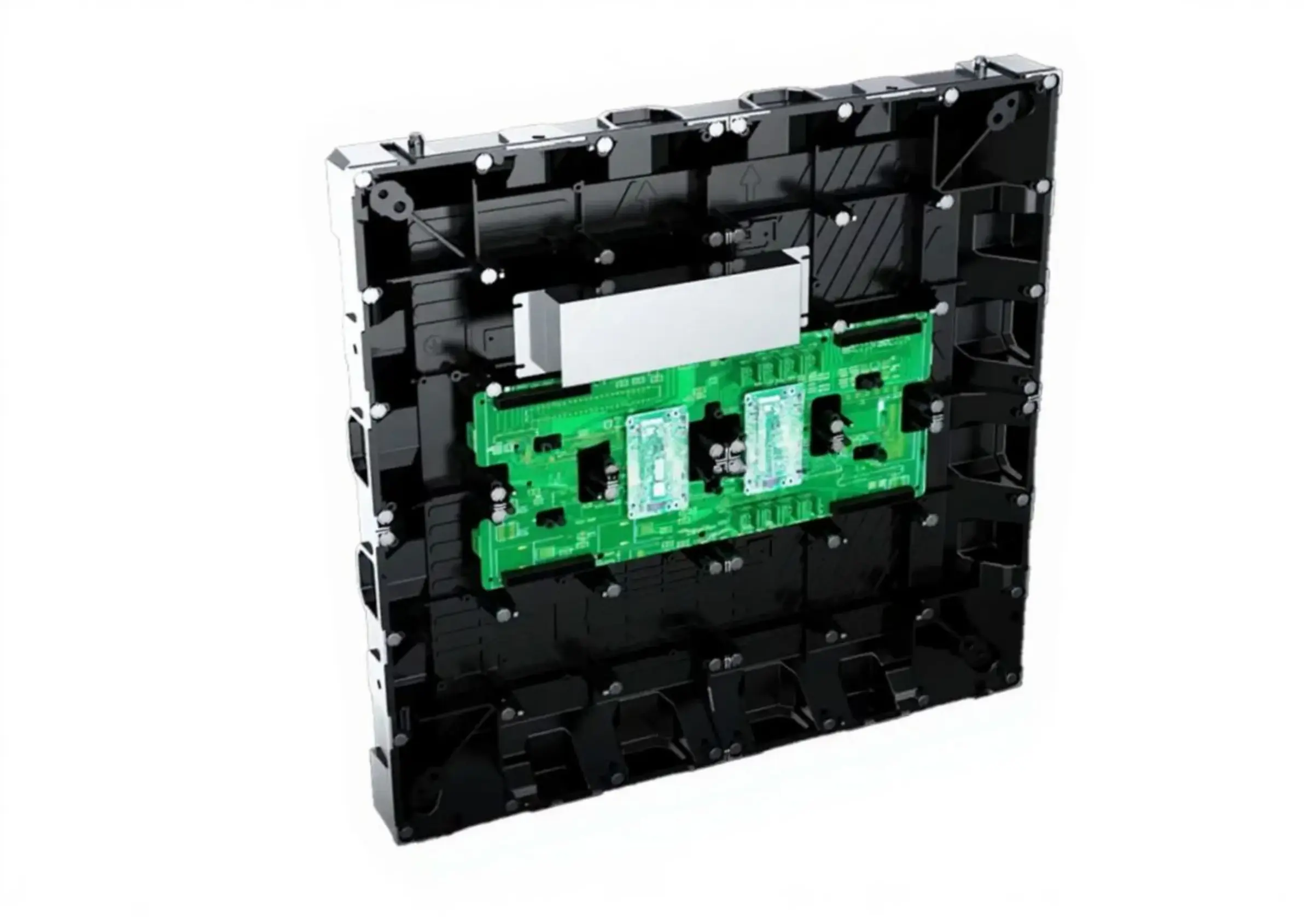
ハードワイヤードのディスプレイシステムでは、データ線と電源線は通常、 統合バックプレーン または ハブボード, に統合されており、散乱するケーブルを最小限に抑え、クリーンで堅牢なセットアップを実現します。
メリットとデメリット
LEDディスプレイにおけるハード接続の長所と短所をまとめた表は次のとおりです。
| メリット | Cons |
|---|---|
| High Stability | Limited Flexibility |
| Hard connections provide a robust and secure link between modules, minimizing movement and misalignment. | Not suitable for applications requiring frequent adjustments or relocations. |
| 耐久性 | Higher Initial Cost |
| Less prone to damage, resulting in lower maintenance costs over time. | Generally more expensive upfront compared to soft connections. |
| Stable Signal Transmission | Additional Maintenance Cost |
| Ensures reliable data and power transmission with minimal interference. | Requires ongoing maintenance as LED modules can be less expensive, but the need for additional hub cards can increase overall costs. |
| 優れた熱放散性 | Increased Module Replacement Cost |
| Rigid structure helps manage heat effectively, prolonging LED lifespan. | Replacement of individual modules and Hub board may incur additional costs due to the need for specialized components. |
| Precision Alignment | |
| Achieves high levels of flatness and alignment, essential for high-quality displays. | |
| 簡単設置 | |
| Plug-and-play design simplifies setup and allows for front service access. | |
| Lightweight | |
| Generally lighter weight allows for easier handling and installation. | |
| Aesthetic Appeal | |
| Clean design with no complex wiring connections enhances visual appeal. |
LEDディスプレイのソフト接続とは?
ソフト接続 technology takes the opposite approach, embracing flexibility. It utilizes power cables, flat data cables to link modules.
This method allows for a degree of movement and tolerance between modules, making it ideal for installations that are not perfectly flat or require a more forgiving assembly process.
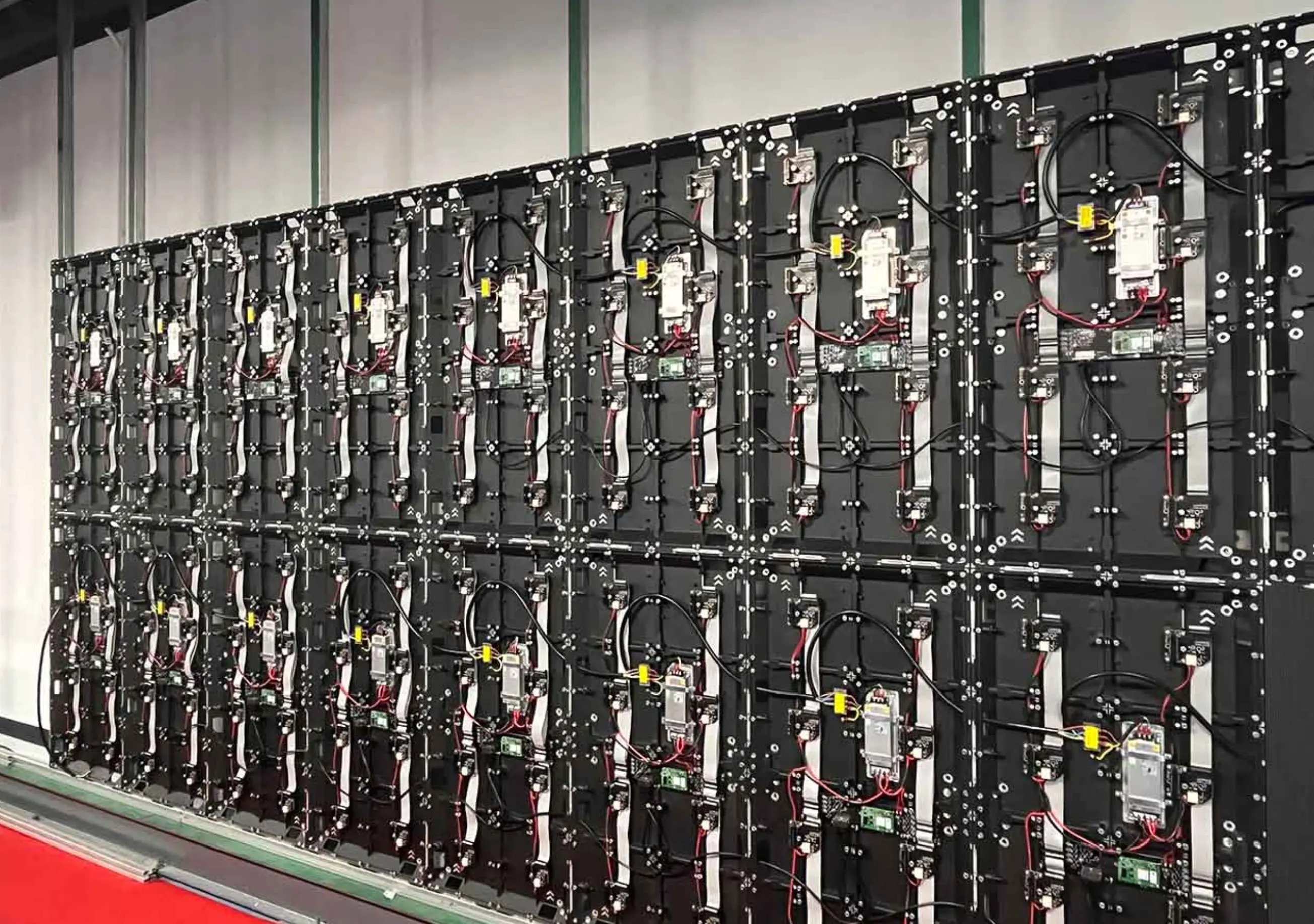
The soft connection of the LED screen is also called a wired connection.
メリットとデメリット
| メリット | Cons |
|---|---|
| Flexibility | Potential Signal Interference |
| Ideal for irregular or curved surfaces, allowing for creative designs. | May be more susceptible to signal interference, affecting performance. |
| Cost-Effective | Durability Concerns |
| Typically lower initial cost compared to hard connections. | More prone to damage over time, potentially increasing maintenance needs. |
| Lightweight Design | Complex Installation |
| Lighter weight can simplify handling and installation. | Installation may involve complicated cable connections between modules and receiver cards. |
| Modular Upgrades | Aesthetic Issues |
| Easier to replace or upgrade individual modules without major disruption. | Can appear messy with tangled wires, leading to a less tidy look. |
正しい選択:ソフト接続かハード接続か?
Now, we have understood all the pros and cons. You might wonder: Soft Connection or Hard Connection? Which should I choose?
Generally, choosing between a hard and soft connection requires a careful evaluation of the project’s specific needs, balancing factors like visual quality, installation environment, usage duration, and budget.
When deciding between soft and hard connections for LED displays, consider the following factors:
設置の複雑さ
- HardConnections: Generally easier to install, requiring fewer tools and less technical expertise. Ideal for quick setups.
- Soft Connections: A more complex installation process that may require specialized tools and skills. This can lead to longer setup times.
Application Scenarios:
- Soft Connections: Best suited for irregular or curved surfaces where flexibility is essential. They allow for creative designs and easier adjustments.
- Hard Connections: More appropriate for stable environments, control roomss, conference room where high durability and stability are critical, such as permanent installations in commercial settings.
Visual Quality:
- Soft Connections: May offer less precision in alignment, potentially affecting the overall visual quality. However, they can adapt to various design needs.
- Hard Connections: Provide superior flatness and alignment, resulting in higher visual quality, especially for high-resolution displays.
Budget:
- Soft Connections: Typically lower initial costs, making them a cost-effective choice for budget-conscious projects.
- Hard Connections: Higher upfront costs, but may lead to lower maintenance expenses over time due to their durability and stability.
結論
In this post, we explored the basic concepts and key considerations for choosing between soft and hard connections for LED displays.
If you’re unsure which option is best for your project, we encourage you to evaluate your specific requirements and priorities. For further assistance or to discuss your project in detail, please feel free to contact us. We’re here to help you make the right choice for your LED display needs!
For installation planning alongside module connections, compare front versus rear service access および rental versus fixed display setups.
関連記事