

Servicio frontal vs. servicio posterior: ¿Cuál es mejor para un display LED?
Servicio frontal vs. servicio posterior: ¿Cuál es mejor para un display LED? Descubra las características y diferencias entre los métodos de mantenimiento de pantallas LED.
Servicio Frontal vs. Servicio Posterior: ¿Cuál es mejor para tu pantalla LED?
Cuando se trata de la instalación y el mantenimiento de pantallas LED, tu prioridad máxima es siempre la fiabilidad, la calidad visual y el funcionamiento fluido. Ya sea que la pantalla LED ilumine una tienda minorista, controle un centro de operaciones crítico o capte miradas en una plaza concurrida, la forma en que mantienes tu pantalla LED afecta a todo: desde el rendimiento y la estética hasta el costo a largo plazo.
Tanto el servicio frontal como el posterior son enfoques probados para mantener tus pantallas LED funcionando. Pero ¿cuál es realmente el mejor para tus necesidades? Esta es una pregunta común tanto para los novatos como para los profesionales veteranos de la industria.
Por lo tanto, en este artículo, profundizaré en el debate del “Servicio Frontal vs. Servicio Posterior”. Obtendrás una comprensión clara de lo que ofrece cada método, sus diferencias y consejos prácticos sobre cómo elegir la mejor opción para tu proyecto de LED, para que puedas tomar una decisión informada para el éxito a largo plazo de tu pantalla.
¿Listo para comenzar? Entramos en materia.
En este artículo
- Introducción
- ¿Qué es el Servicio Frontal?
- ¿Qué es el Servicio Posterior?
- La diferencia entre el Servicio Frontal y el Servicio Posterior
- Ventajas y desventajas del Servicio Frontal y del Servicio Posterior
- Cómo elegir el método de mantenimiento adecuado para tu pantalla LED
- Conclusión
Introducción
Las pantallas LED se han convertido en el latido visual de nuestro entorno construido. Desde carteles exteriores colosales que coronan los horizontes urbanos hasta elegantes pantallas de recepción a ras de pared, desde fachadas minoristas inmersivas hasta salas de control críticas, los LED ofrecen luminosidad, fidelidad de color y contenido dinámico con una eficiencia notable. Sin embargo, detrás de los píxeles hay una decisión que moldean silenciosamente todo el ciclo de vida de tu pantalla: cómo la vas a mantener.
Si bien las especificaciones como el paso de píxel, la luminosidad y la tasa de refresco suelen dominar las conversaciones de selección, el método de mantenimiento—servicio frontal o servicio posterior—es igual de crucial. Determina dónde puedes instalar físicamente una pantalla, con qué rapidez puedes resolver fallas, cuánto espacio estructural debes asignar, cómo trabajará tu equipo con seguridad y, en última instancia, cuál será tu costo total de propiedad (TCO) durante años de operación.
Generalmente, en cuanto al mantenimiento de pantallas LED, existen dos métodos populares: servicio frontal y servicio posterior.
¿Qué es el Servicio Frontal?
El servicio frontal es un método de mantenimiento único y directo diseñado para entornos donde el espacio detrás de la pantalla LED es limitado o totalmente inexistente. Con el servicio frontal, los técnicos realizan todas las acciones de mantenimiento—reemplazo de módulos, acceso a energía y señal, y ajustes finos—desde el frente de la pantalla.
Actualmente, las formas principales de lograr el servicio frontal son el uso de tornillos de montaje magnéticos o tornillos fijos frontales (principalmente para pantallas exteriores).
1. Tornillos de montaje magnéticos
Este es el método más común para pantallas LED de interior.
El habilitador principal es un sistema de montaje magnético. Cada módulo LED está diseñado para fijarse magnéticamente a las estructuras del gabinete usando imanes fuertes y suele ir acompañado de un bloqueo mecánico o función de “antideslizamiento” para evitar el desprendimiento accidental. Este diseño permite instalar los módulos rápidamente y mantenerlos firmemente, a la vez que hace posible retirar un solo módulo defectuoso para su servicio sin acceder a la parte trasera.
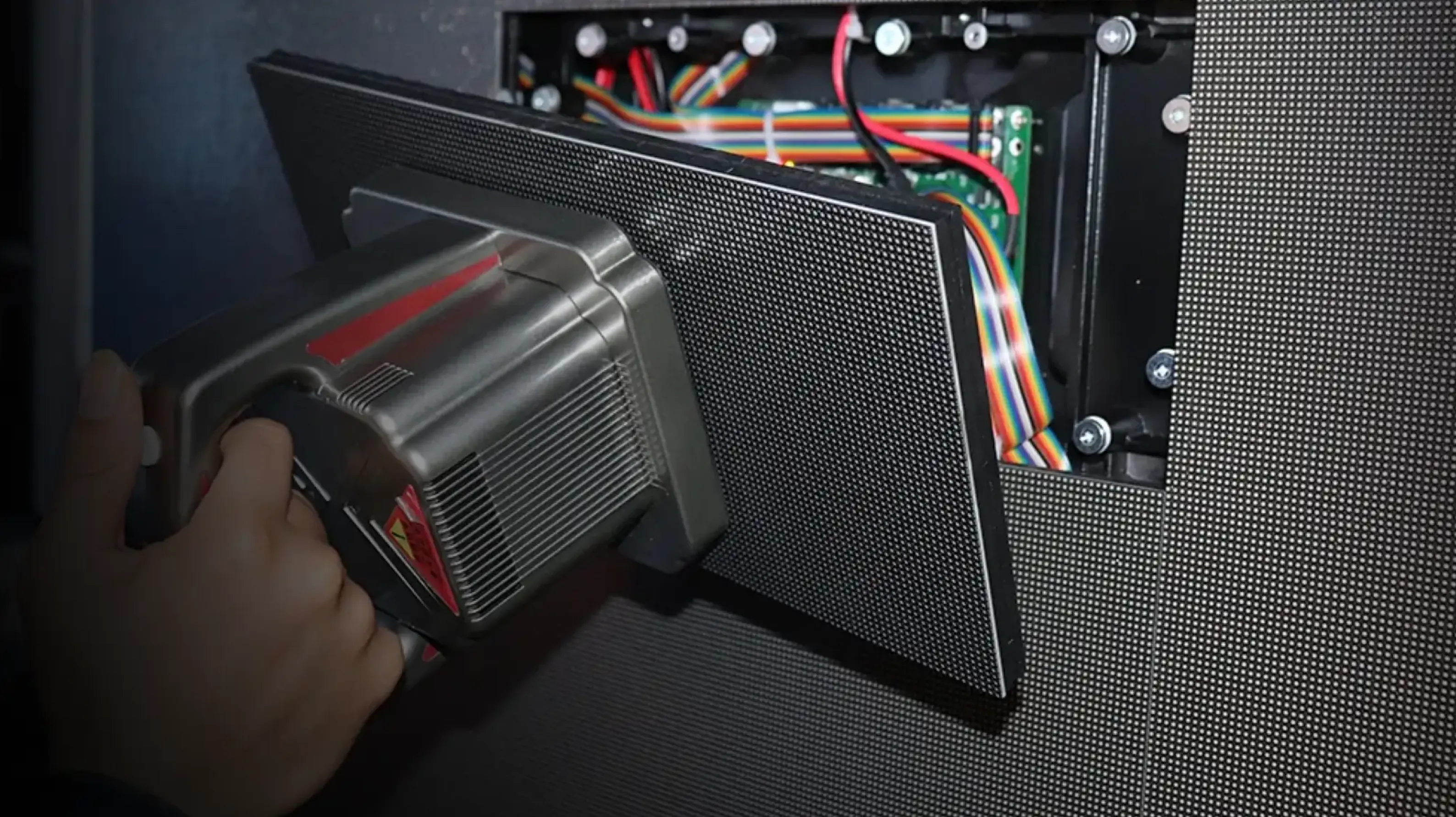
Explicación sencilla: Piensa en el mantenimiento frontal como reemplazar un mosaico en una pared terminada sin demolerla. Usas una herramienta de succiono especializada para levantar un solo módulo directamente desde el frente, reemplazarlo y colocarlo en su lugar exacto, sin necesidad de trabajar por detrás de la pared.
El diseño magnético hace que la retirada sea rápida y fácil, y los módulos encajan en su sitio con un esfuerzo mínimo, lo que garantiza una instalación plana y precisa.
2. Tornillos fijos frontales con llave rotativa
para pantallas LED exteriores de mayor tamaño y mayor robustez, pantallas LED exteriores, el mantenimiento frontal se suele realizar mediante tornillos fijos frontales en combinación con una llave rotativa.
Aquí, cada módulo LED se fija desde el frente con tornillos especiales que se pueden retirar con una llave rotativa dedicada. Este diseño garantiza que cada módulo permanece seguro y estable, incluso en condiciones meteorológicas adversas.
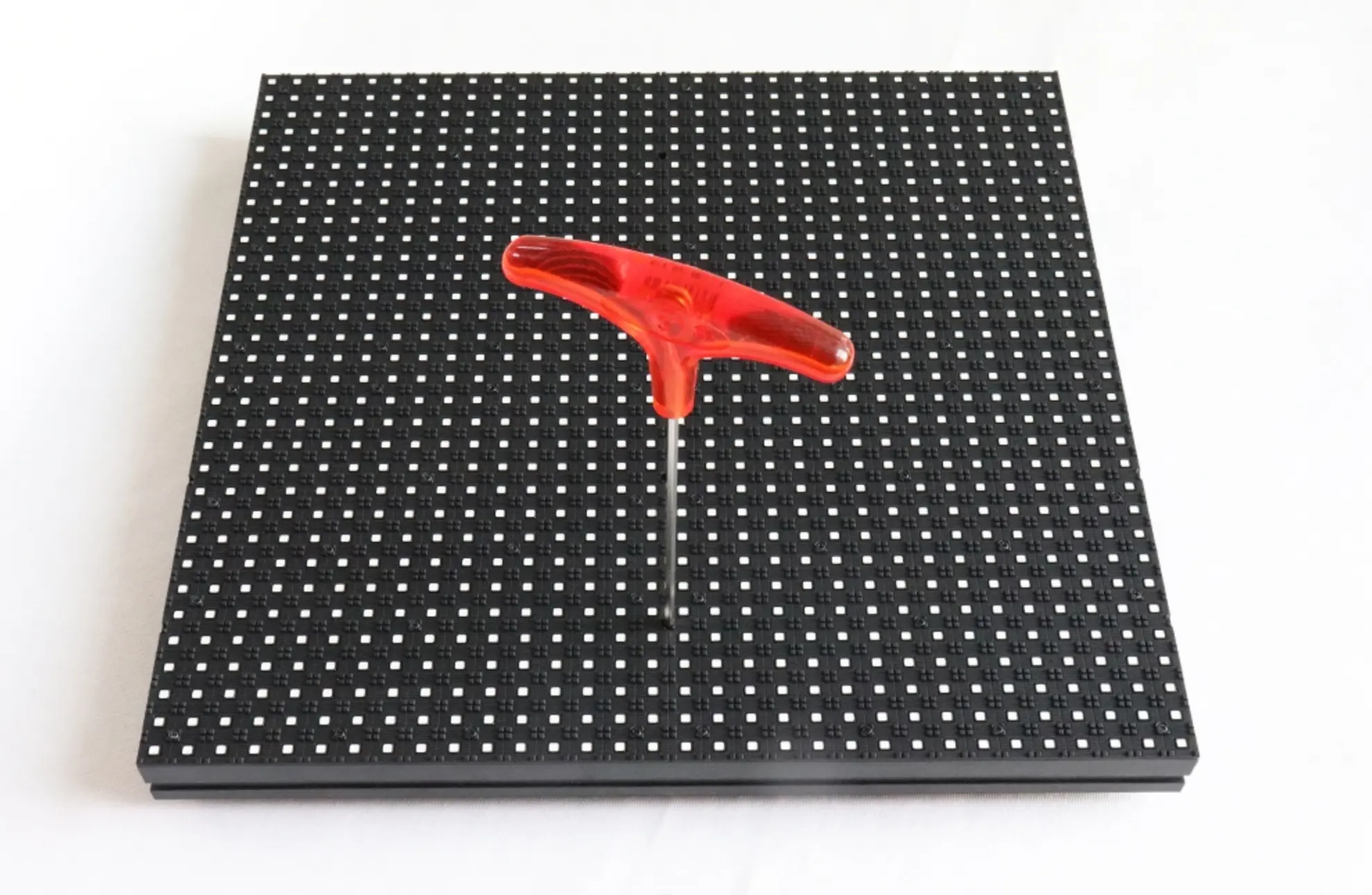
If maintenance is needed, a technician accesses the screws from the front, loosens them with the rotary wrench, and removes the faulty module for repair or replacement. This approach provides extra security and stability for outdoor scenarios where the display faces wind, vibration, or other environmental stress.
Both front service methods eliminate the need for rear access, offering efficient maintenance with minimal disruption and unlocking new possibilities for where and how you install your LED display.
Where front service fits best:
- Tight, wall-flush installations (e.g., TV Studio, churchs, hotel and retail feature walls).
- Embedded or recessed applications like glass curtain walls, where back access is impossible.
- Complex shapes—curved, cylindrical, or custom architectural integrations—where a “back side” is either inaccessible or doesn’t exist in a usable way.
- Spaces where visual integration and architectural cleanliness are prioritized, and opening a rear maintenance room or corridor would compromise the design.
In short, front service is your go-to solution when the screen must live up close and personal with the built environment, where back access is impractical and every millimeter of depth matters.
¿Qué es el Servicio Posterior?
Rear service is the traditional LED maintenance approach.
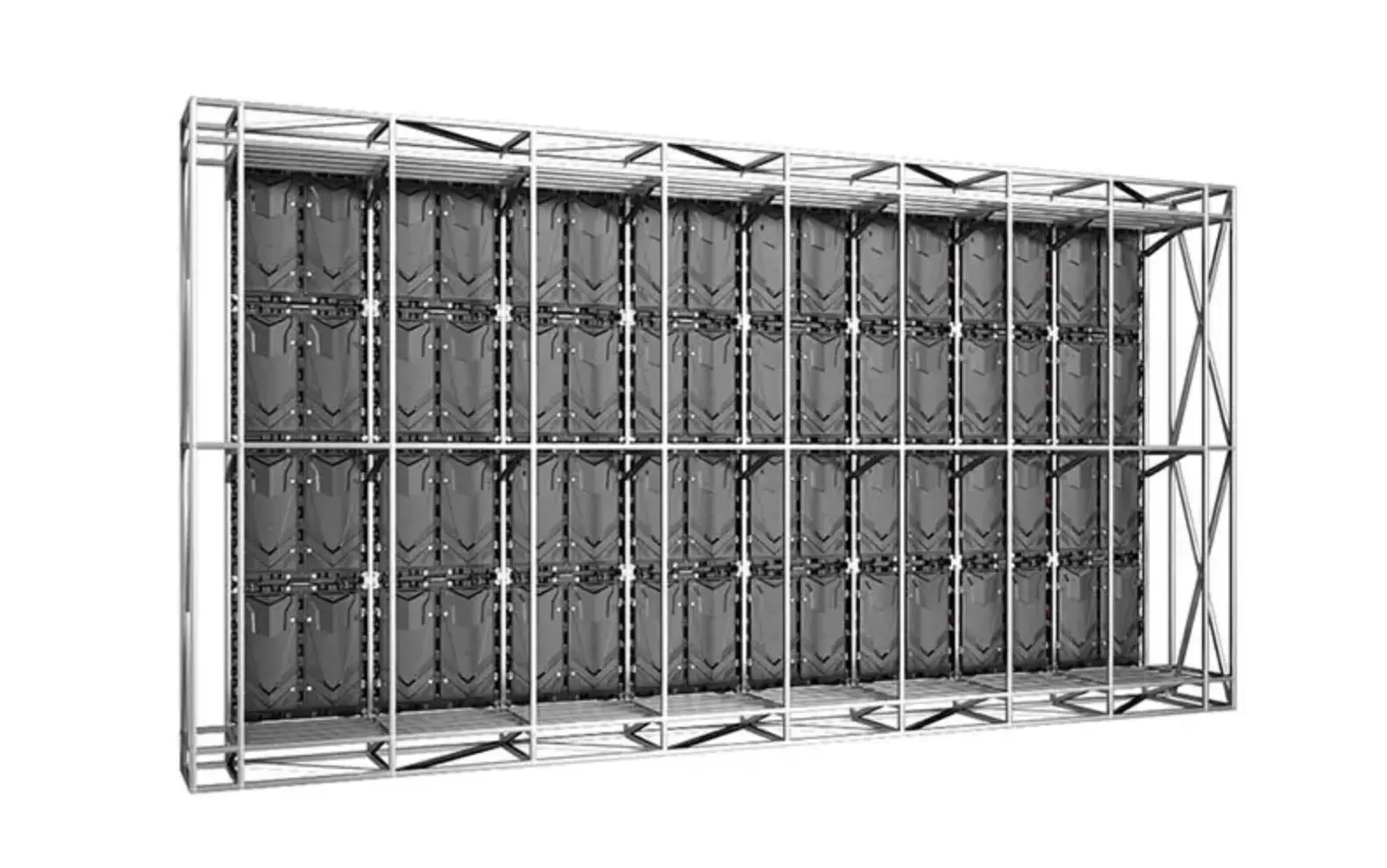
It assumes that technicians will access and service the screen from behind, which requires a dedicated maintenance corridor or backstage area large enough for safe movement and work.
Typical rear clearance requirements are on the order of 60–80 cm (or more), depending on the structure and local safety practices.
Technicians enter this space to unbolt and remove modules, power supplies, or receiving cards from the rear of cabinets. Cabinets are secured via mechanical fasteners—screws or bolts—onto robust steel frames that are designed to handle weight, wind loads (outdoors), and long-term structural stability.
Where rear service fits best:
- Large outdoor billboards and rooftops with dedicated steel structures and safe back access.
- Control centers, broadcast walls, and facilities that can provision a planned maintenance corridor.
- Indoor installations with generous architectural space where a rear room or aisle is feasible and safe.
If your site can afford the architectural space and you want the proven stability and familiarity of traditional installations, rear service often remains the logical, cost-effective choice.
La diferencia entre el Servicio Frontal y el Servicio Posterior
Here’s a detailed comparison to spotlight the core differences.
| Característica | Servicio al cliente | Servicio Posterior |
| Maintenance Direction | From the front of the display | From behind the display |
| Space Required | No rear space needed; can be wall-mounted | Requires rear access/corridor for maintenance |
| Typical Scenario | Indoor (walls, tight spaces); creative shapes | Large outdoor screens; rooms with rear access |
| Module Removal Method | Magnetic mounting screws or front fixed screws with rotary wrench | Unfasten modules from the back using traditional screws/bolts |
| Complejidad de instalación | Usually simpler; direct access to modules | Structure and corridor planning required |
| Aesthetic Integration | Enables flush or embedded installations | Often requires visible frame or access space |
| Speed of Maintenance | Fast (front suction tools, rotary wrench) | Slower; more steps to reach faulty modules |
| Costo | Slightly higher due to specialized components | Often lower product cost, higher structure cost |
| Suitability | Best for limited or zero rear access locations | Ideal where rear access is feasible and safe |
| Environmental Security | Magnetic/locking system, front screws (outdoor) | Traditional bolts, more robust against tampering |
| Heat Dissipation | Needs careful design for airflow (wall flush) | Easier rear ventilation management |
Ventajas y desventajas del Servicio Frontal y del Servicio Posterior
Pros and Cons of Front Service
| Ventajas | Desventajas |
| Allows maintenance from the front, no rear access needed | Usually higher initial product cost due to special design |
| Ideal for wall-mounted, embedded, or tight spaces | Magnetic modules may be less robust against vibration (indoors only) |
| Faster and easier module replacement; less downtime | Precision installation needed to ensure flat, seamless surface |
| Enables creative shapes and flush installations | Heat dissipation requires careful design in wall-flush installs |
| Less disruption to building structure or existing design | For outdoor: installing/removing front screws can be slower |
| Usually requires only one technician for module swap | Specialized tools (suction cup, rotary wrench) required |
Pros and Cons of Rear Service
| Ventajas | Desventajas |
| Heavy-duty structure, strong stability-better wind/vibration resistance | Needs maintenance corridor/space behind the screen |
| More cost-effective product and cabinet for large/outdoor screens | Not suitable for wall-flush or tight installations |
| Traditional screw/bolt fixing is secure and familiar | Module replacement takes more time and labor |
| Excellent heat dissipation via rear ventilation | Maintenance may cause disruptions backstage |
| Easier to manage and maintain large-scale or outdoor LED screens | Multiple technicians may be needed for safe rear work |
| Simpler structure for robust environments | Access is more challenging for creative shapes or designs |
Cómo elegir el método de mantenimiento adecuado para tu pantalla LED
Now, we have learn the pros and cons of front service and rear service. You might wonder: how to choose the right one for my next pantalla LED?
Use this simple decision path to narrow your choice quickly:
1. Do you have usable rear space?
- If “no,” choose front service. The absence of a safe, accessible corridor effectively mandates it.
- If “yes,” both options remain viable; proceed to functional priorities.
2. What matters most in your environment?
- Maximum structural stability and lowest initial product cost: Favor rear service, especially in large outdoor or industrial contexts.
- Minimal downtime and fast, uncomplicated maintenance: Favor front service; one-person module swaps from the front can be a decisive operational advantage.
- Architectural integration and aesthetics: Favor front service for wall-flush, recessed, or creative shapes.
2. Budget alignment
- Front service typically carries a 5–10% product premium. If your budget is tight and space permits, rear service can free funds for pixel pitch, content systems, or other value-adds.
- If lifecycle costs and operational continuity are paramount, front service may offset its premium via lower maintenance labor and reduced disruption over 5–8 years.
Scenario-based guidance:
- Retail flagships and hospitality lobbies: Front service—space is at a premium and aesthetics drive value.
- Control rooms and broadcast walls: Either can work; if a rear corridor is planned, rear service is viable; if fast front access and minimal disruption matter most, front service is attractive.
- DOOH billboards and rooftops: Rear service—robust structures, proven stability, and easy airflow typically win.
- Creative shapes (cylinders, curves, spheres, cubes, embedded façades): Front service—front access is often the only practical approach.
Conclusión
In this post, we examined the difference between front service and rear service for LED displays through their core concepts and features. We showed how space constraints, maintenance speed, aesthetics, and long-term operations shape the choice more than any single spec number. We compared their Advantages and disadvantages, highlighted where each one thrives, and provided selection guidance to reduce risk and guesswork.
If you still have questions, want help applying this framework to your specific site, or need a complete analysis, contactarnos. We’ll help you match the right maintenance approach to your environment so your LED display delivers the performance, reliability, and visual impact you expect—on day one and for years to come.
For documented maintenance examples, review the ES Series front/rear service options, the LED Touch All-in-one Machine full-front maintenance design, and the Philips showroom project.
Artículos Relacionados