

Serviço Frontal vs. Serviço Traseiro: Qual é o Melhor para Exibição de LED
Serviço Frontal vs. Serviço Traseiro: Qual É o Melhor para Exibição de LED? Descubra as funcionalidades e diferenças entre os métodos de manutenção de telas de LED.
Serviço Frontal vs. Serviço Traseiro: qual é o melhor para o seu display LED?
Quando se trata de instalação e manutenção de displays de LED, sua prioridade máxima é sempre a confiabilidade, a qualidade visual e o funcionamento suave. Independentemente de a tela de LED estar iluminando uma loja varejista, controlando um centro de operações crítico ou atraindo olhares em uma praça movimentada, a forma como você mantém seu display de LED impacta tudo, desde o desempenho e a estética até o custo de longo prazo.
Tanto o serviço frontal quanto o serviço traseiro são abordagens comprovadas para manter suas telas de LED funcionando. Mas qual é realmente a melhor para as suas necessidades? Esta é uma pergunta comum tanto para novos quanto para profissionais experientes do setor.
Portanto, neste post, vou aprofundar o debate “Serviço Frontal vs. Serviço Traseiro”. Você terá uma compreensão clara do que cada método oferece, suas diferenças e dicas práticas sobre como escolher a melhor adequação para o seu projeto de LED, para que possa tomar uma decisão informada para o sucesso de longo prazo da sua exibição.
Pronto para começar? Vamos lá.
Neste Artigo
- Introdução
- O que é o Serviço Frontal?
- O que é o Serviço Traseiro?
- A diferença entre Serviço Frontal e Serviço Traseiro
- Vantagens e desvantagens do Serviço Frontal e do Serviço Traseiro
- Como Escolher o Método de Manutenção Adequado para o Seu Visor LED
- Conclusão
Introdução
Os visores LED tornaram-se o batimento cardíaco visual do nosso ambiente construído. De murais externos colossais que coroam silhuetas de cidades a telas elegantes embutidas em salões, de fachadas de varejo imersivas a salas de controle críticas, os LEDs entregam brilho, fidelidade de cores e conteúdo dinâmico com notável eficiência. No entanto, por trás dos pixels, existe uma decisão que molda discretamente todo o ciclo de vida da sua tela: como você irá mantê-la.
Embora especificações como passo do pixel, brilho e taxa de atualização tendam a dominar as conversas de seleção, o método de manutenção—serviço frontal ou serviço traseiro—é igualmente crucial. Ele determina onde você pode fisicamente instalar a tela, a rapidez com que pode resolver falhas, a quantidade de espaço estrutural que deve ser alocado, como sua equipe trabalhará com segurança e, ultimately, qual será o seu custo total de propriedade (TCO) ao longo de anos de operação.
Geralmente, quando se trata da manutenção de telas LED, existem dois métodos populares: serviço frontal e serviço traseiro.
O que é o Serviço Frontal?
O serviço frontal é um método de manutenção único e direto projetado para ambientes onde o espaço atrás do visor LED é limitado ou totalmente inexistente. Com o serviço frontal, os técnicos realizam todas as ações de manutenção—substituição de módulos, acesso a energia e sinal e ajustes finos—pela frente da tela.
Atualmente, as principais maneiras de alcançar o serviço frontal são o uso de parafusos de montagem magnéticos ou parafusos fixos frontais (principalmente para telas externas).
1. Parafusos de Montagem Magnéticos
Este é o método mais comum para visores LED de ambientes internos.
O principal facilitador é um sistema de montagem magnético. Cada módulo LED é projetado para ser fixado magneticamente às estruturas do gabinete usando ímãs fortes e é tipicamente acompanhado de uma trava mecânica ou característica de “segurança contra queda” para evitar desprendimento acidental. Este design permite que os módulos sejam instalados rapidamente e mantidos firmemente, tornando também possível remover um único módulo defeituoso para manutenção sem precisar acessar a parte traseira.
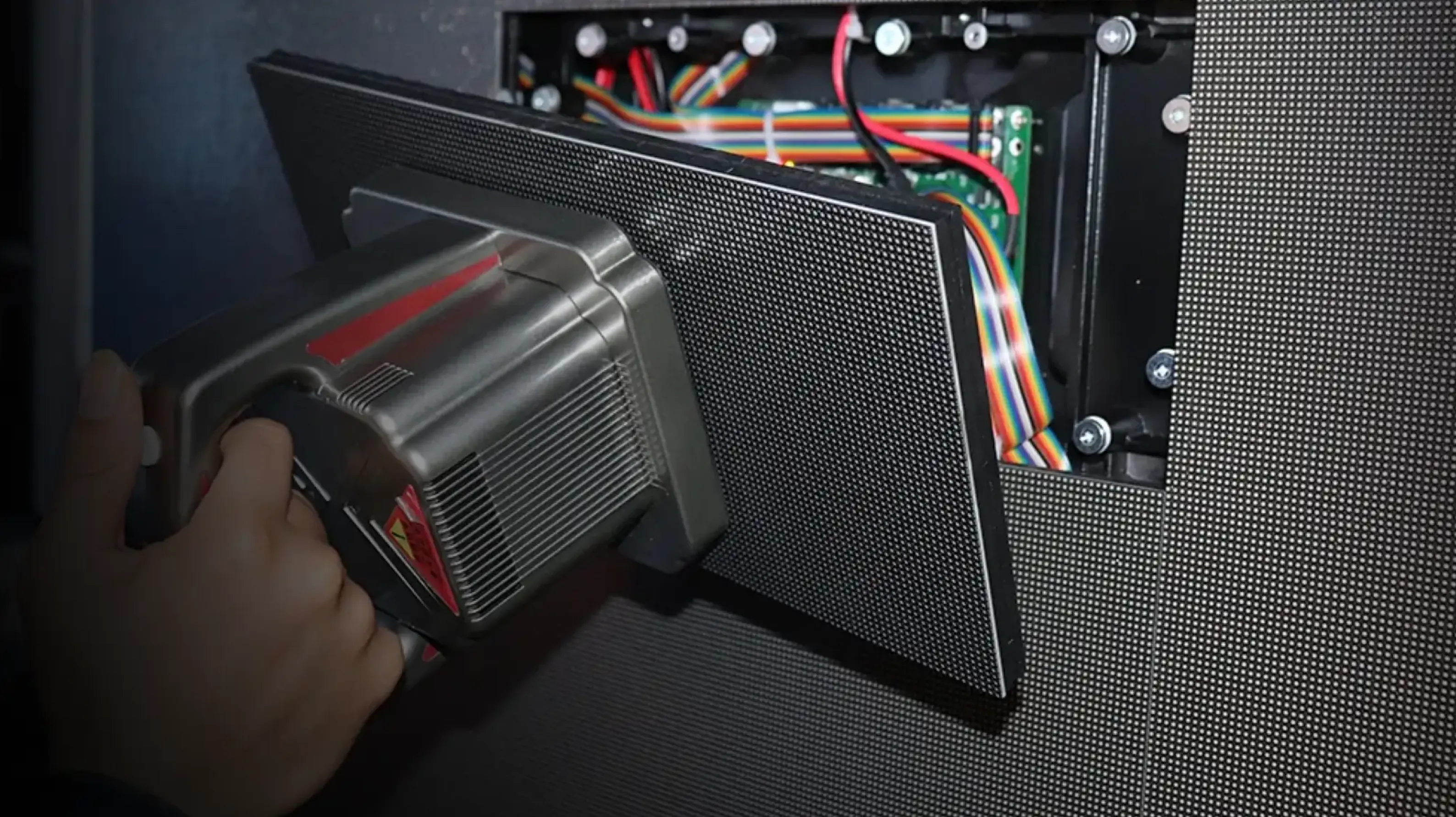
Simple explanation: Think of front service like replacing a tile on a finished mosaic without removing the wall. You use a specialized suction tool to lift the single tile (module) straight out from the front, swap it, and set it back into the exact place—no need to get behind the wall.
The magnetic design makes removal quick and easy, and modules snap back into place with minimal effort, ensuring installation remains flat and precise.
2. Front Fixed Screws With Rotary Wrench
For larger, more robust outdoor LED screens, front service is often accomplished using front fixed screws in combination with a rotary wrench.
Here, each LED module is fastened from the front with special screws that can be removed with a dedicated rotary wrench. This design ensures each module remains secure and stable, even in challenging weather conditions.
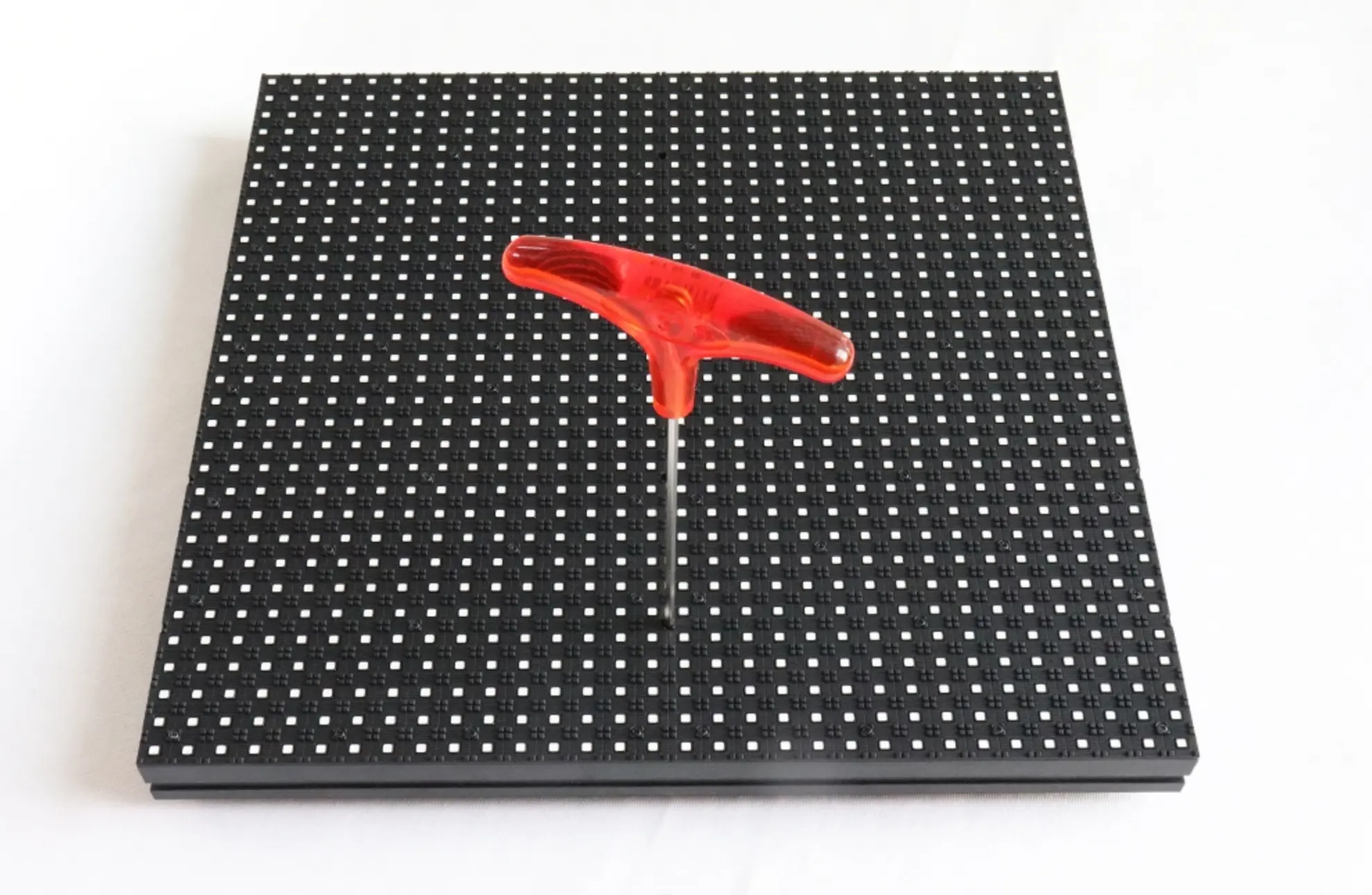
If maintenance is needed, a technician accesses the screws from the front, loosens them with the rotary wrench, and removes the faulty module for repair or replacement. This approach provides extra security and stability for outdoor scenarios where the display faces wind, vibration, or other environmental stress.
Both front service methods eliminate the need for rear access, offering efficient maintenance with minimal disruption and unlocking new possibilities for where and how you install your LED display.
Where front service fits best:
- Tight, wall-flush installations (e.g., TV Studio, churchs, hotel and retail feature walls).
- Embedded or recessed applications like glass curtain walls, where back access is impossible.
- Complex shapes—curved, cylindrical, or custom architectural integrations—where a “back side” is either inaccessible or doesn’t exist in a usable way.
- Spaces where visual integration and architectural cleanliness are prioritized, and opening a rear maintenance room or corridor would compromise the design.
In short, front service is your go-to solution when the screen must live up close and personal with the built environment, where back access is impractical and every millimeter of depth matters.
O que é o Serviço Traseiro?
Rear service is the traditional LED maintenance approach.
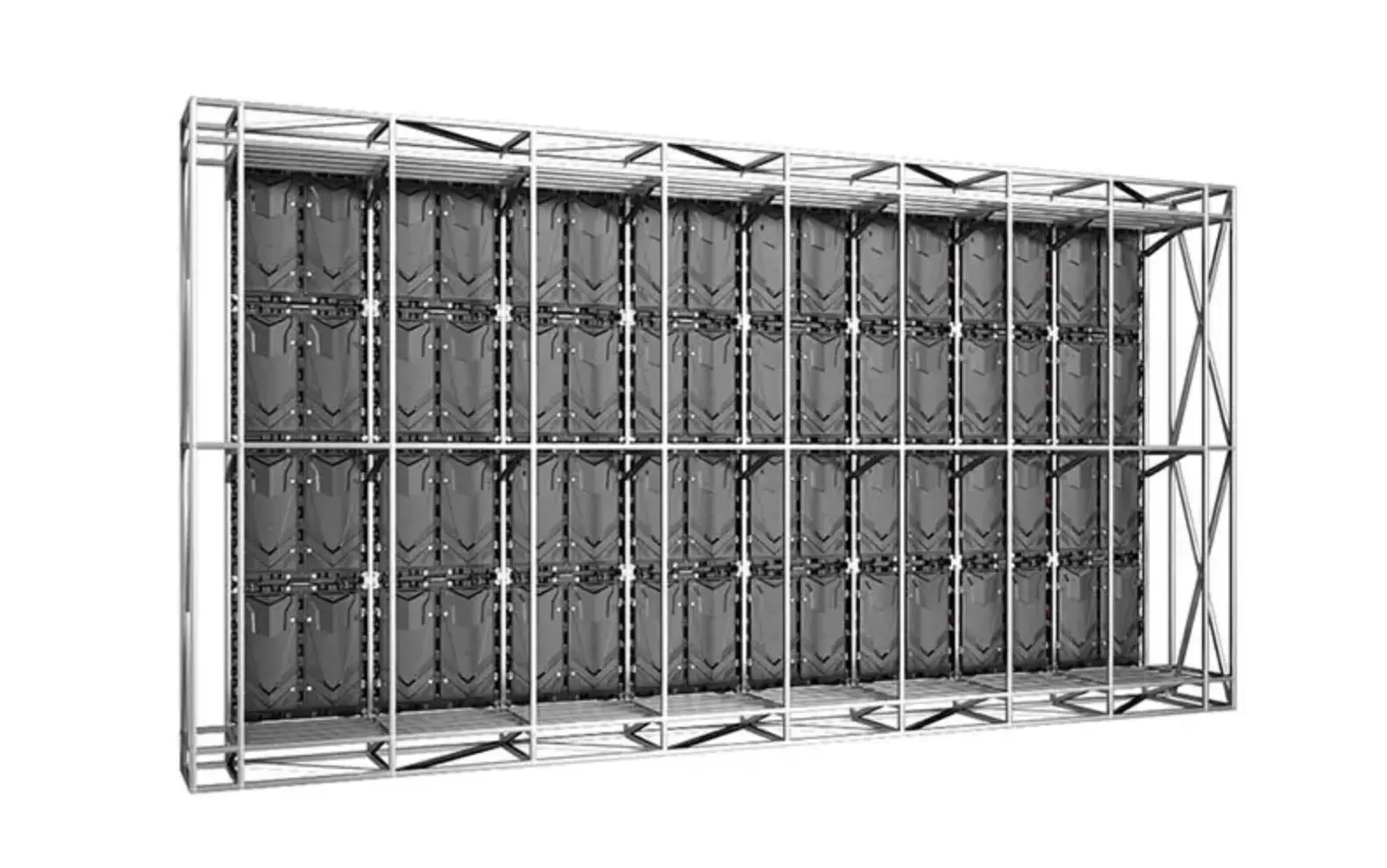
It assumes that technicians will access and service the screen from behind, which requires a dedicated maintenance corridor or backstage area large enough for safe movement and work.
Typical rear clearance requirements are on the order of 60–80 cm (or more), depending on the structure and local safety practices.
Technicians enter this space to unbolt and remove modules, power supplies, or receiving cards from the rear of cabinets. Cabinets are secured via mechanical fasteners—screws or bolts—onto robust steel frames that are designed to handle weight, wind loads (outdoors), and long-term structural stability.
Where rear service fits best:
- Large outdoor billboards and rooftops with dedicated steel structures and safe back access.
- Centros de controle, paredes de transmissão e instalações que podem provisionar um corredor de manutenção planejado.
- Instalações internas com espaço arquitetônico generoso onde um cômodo ou corredor traseiro seja viável e seguro.
Se o seu local puder suportar o espaço arquitetônico e você desejar a estabilidade comprovada e a familiaridade das instalações tradicionais, a manutenção traseira costuma permanecer a escolha lógica e economicamente eficiente.
A diferença entre Serviço Frontal e Serviço Traseiro
Aqui está uma comparação detalhada para destacar as diferenças essenciais.
| Recurso | Serviço Frontal | Serviço Traseiro |
| Direção da manutenção | A partir da frente do display | A partir da parte de trás do display |
| Espaço necessário | Não é necessário espaço traseiro; pode ser montado na parede | Exige acesso traseiro/corredor para manutenção |
| Cenário típico | Interior (paredes, espaços apertados); formas criativas | Telas externas grandes; salas com acesso traseiro |
| Método de Remoção de Módulos | Parafusos magnéticos ou parafusos fixos frontais com chave rotativa | Afrouxe os módulos pela parte traseira usando parafusos/borrachas tradicionais |
| Complexidade da Instalação | Geralmente mais simples; acesso direto aos módulos | Planejamento da estrutura e do corredor necessário |
| Integração Estética | Permite instalações de limpeza ou embutidas | Freqüentemente requer moldura visível ou espaço de acesso |
| Velocidade da Manutenção | Rápido (ferramentas de sucção frontal, chave rotativa) | Mais lento; mais etapas para atingir módulos com defeito |
| Custo | Ligeiramente mais alto devido a componentes especializados | Frequentemente custo do produto menor, custo da estrutura maior |
| Adequação | Melhor para locais com acesso traseiro limitado ou nulo | Ideal where rear access is feasible and safe |
| Environmental Security | Magnetic/locking system, front screws (outdoor) | Traditional bolts, more robust against tampering |
| Heat Dissipation | Needs careful design for airflow (wall flush) | Easier rear ventilation management |
Vantagens e desvantagens do Serviço Frontal e do Serviço Traseiro
Pros and Cons of Front Service
| Vantagens | Desvantagens |
| Allows maintenance from the front, no rear access needed | Usually higher initial product cost due to special design |
| Ideal for wall-mounted, embedded, or tight spaces | Magnetic modules may be less robust against vibration (indoors only) |
| Faster and easier module replacement; less downtime | Precision installation needed to ensure flat, seamless surface |
| Enables creative shapes and flush installations | Heat dissipation requires careful design in wall-flush installs |
| Less disruption to building structure or existing design | For outdoor: installing/removing front screws can be slower |
| Usually requires only one technician for module swap | Specialized tools (suction cup, rotary wrench) required |
Pros and Cons of Rear Service
| Vantagens | Desvantagens |
| Heavy-duty structure, strong stability-better wind/vibration resistance | Needs maintenance corridor/space behind the screen |
| More cost-effective product and cabinet for large/outdoor screens | Not suitable for wall-flush or tight installations |
| Traditional screw/bolt fixing is secure and familiar | Module replacement takes more time and labor |
| Excellent heat dissipation via rear ventilation | Maintenance may cause disruptions backstage |
| Easier to manage and maintain large-scale or outdoor LED screens | Multiple technicians may be needed for safe rear work |
| Simpler structure for robust environments | Access is more challenging for creative shapes or designs |
Como Escolher o Método de Manutenção Adequado para o Seu Visor LED
Now, we have learn the pros and cons of front service and rear service. You might wonder: how to choose the right one for my next Painel de LED?
Use this simple decision path to narrow your choice quickly:
1. Do you have usable rear space?
- If “no,” choose front service. The absence of a safe, accessible corridor effectively mandates it.
- If “yes,” both options remain viable; proceed to functional priorities.
2. What matters most in your environment?
- Maximum structural stability and lowest initial product cost: Favor rear service, especially in large outdoor or industrial contexts.
- Minimal downtime and fast, uncomplicated maintenance: Favor front service; one-person module swaps from the front can be a decisive operational advantage.
- Architectural integration and aesthetics: Favor front service for wall-flush, recessed, or creative shapes.
2. Budget alignment
- Front service typically carries a 5–10% product premium. If your budget is tight and space permits, rear service can free funds for pixel pitch, content systems, or other value-adds.
- If lifecycle costs and operational continuity are paramount, front service may offset its premium via lower maintenance labor and reduced disruption over 5–8 years.
Scenario-based guidance:
- Retail flagships and hospitality lobbies: Front service—space is at a premium and aesthetics drive value.
- Control rooms and broadcast walls: Either can work; if a rear corridor is planned, rear service is viable; if fast front access and minimal disruption matter most, front service is attractive.
- DOOH billboards and rooftops: Rear service—robust structures, proven stability, and easy airflow typically win.
- Creative shapes (cylinders, curves, spheres, cubes, embedded façades): Front service—front access is often the only practical approach.
Conclusão
In this post, we examined the difference between front service and rear service for LED displays through their core concepts and features. We showed how space constraints, maintenance speed, aesthetics, and long-term operations shape the choice more than any single spec number. We compared their Advantages and disadvantages, highlighted where each one thrives, and provided selection guidance to reduce risk and guesswork.
If you still have questions, want help applying this framework to your specific site, or need a complete analysis, entrar em contato conosco. We’ll help you match the right maintenance approach to your environment so your LED display delivers the performance, reliability, and visual impact you expect—on day one and for years to come.
For documented maintenance examples, review the ES Series front/rear service options, the LED Touch All-in-one Machine full-front maintenance design, and the Philips showroom project.
Artigos Relacionados