

前面メンテナンスと背面メンテナンス:LEDディスプレイに最適な方法はどちら?
前面メンテナンスと背面メンテナンス:LEDディスプレイに最適な方法はどちら? LEDスクリーンのメンテナンス手法の特徴と違いについて確認しましょう。
前面保守 vs. 背面保守:LEDディスプレイにとってどちらが優れた方法?
LEDディスプレイの設置とメンテナンスにおいて、最優先事項は常に信頼性、視覚的な品質、そしてスムーズな動作です。LEDスクリーンが小売店の店舗を明るく照らそうと、重要任務を遂行する管制センターの運用を管理しようとし、混雑した都市の広場で目を引く役割を果たそうとしても、LEDディスプレイのメンテナンス方法は、パフォーマンスや美観から長期的なコストまで、すべてに影響を与えます。
前面保守も背面保守も、LEDスクリーンを安定稼働させるために実証済みのアプローチです。しかし、あなたのニーズに本当に最適なのはどれですか? これは初心者の方にもベテランのプロフェッショナルにも共通するよくある質問です。
そこで、本記事では「前面保守 vs. 背面保守」の議論を掘り下げていきます。各方法の特徴、違い、そしてLEDプロジェクトに最適な方法を選択するための実践的なヒントについて、明確な理解を得ることができます。これにより、ディスプレイの長期的な成功のための賢明な意思決定が可能です。
準備はできましたか? 始めましょう。
この記事の内容
はじめに
LEDディスプレイは、私たちの生活環境における視覚の心拍のような存在となっています。巨大な屋外広告看板が都市のスカイラインを飾り、滑らかで壁に密着したロビーのスクリーン、没入型の小売店のファサード、ミッションクリティカルな管制室に至るまで、LEDは優れた効率で明るさ、色忠実性、ダイナミックなコンテンツを実現します。しかし、ピクセルの背後には、スクリーンのライフサイクル全体を静かに形作る決定があります。それは、どのようにメンテナンスするかという問題です。
ピッチ、輝度、リフレッシュレートなどの仕様は選定の議論を支配しがちですが、メンテナンス方法(前面サービスまたは背面サービス)も同様に重要です。これは、物理的にスクリーンをどこに設置できるか、障害をどの速さで解決できるか、どの程度の構造的空間を確保해야するか、チームが安全に作業できるか、そして最終的に何年もの運用にわたる総所有コスト(TCO)がいくらかを決定します。
一般に、LEDスクリーンのメンテナンスには、前面サービスと背面サービスという2つの一般的な方法があります。
前面保守とは?
前面サービスは、LEDディスプレイの背面の空間が限られていたり完全に利用できなかったりする環境のために設計された、単一かつ直接的なメンテナンス方法です。前面サービスでは、技術者はモジュール交換、電源およびシグナルへのアクセス、微調整などのすべてのメンテナンス作業を、スクリーンの前面から行います。
現在、前面サービスを実現するための主な方法は、磁力取り付けネジや前面固定ネジ(主に屋外スクリーン用)を使用することです。
1. 磁力取り付けネジ
これは最も一般的な方法です 屋内用LEDディスプレイ.
その中核となる機能は、磁気マウントシステムです。各LEDモジュールは強力な磁石によってキャビネット構造に磁気的に取り付けられるよう設計されており、誤って外れることを防ぐための機械式ロックや「防落」機能が組み合わされるのが一般的です。この設計により、モジュールを迅速かつ確実に取り付けることができ、背面にアクセスせずに個々の不良モジュールのみを交換して保守処理することも可能となります。
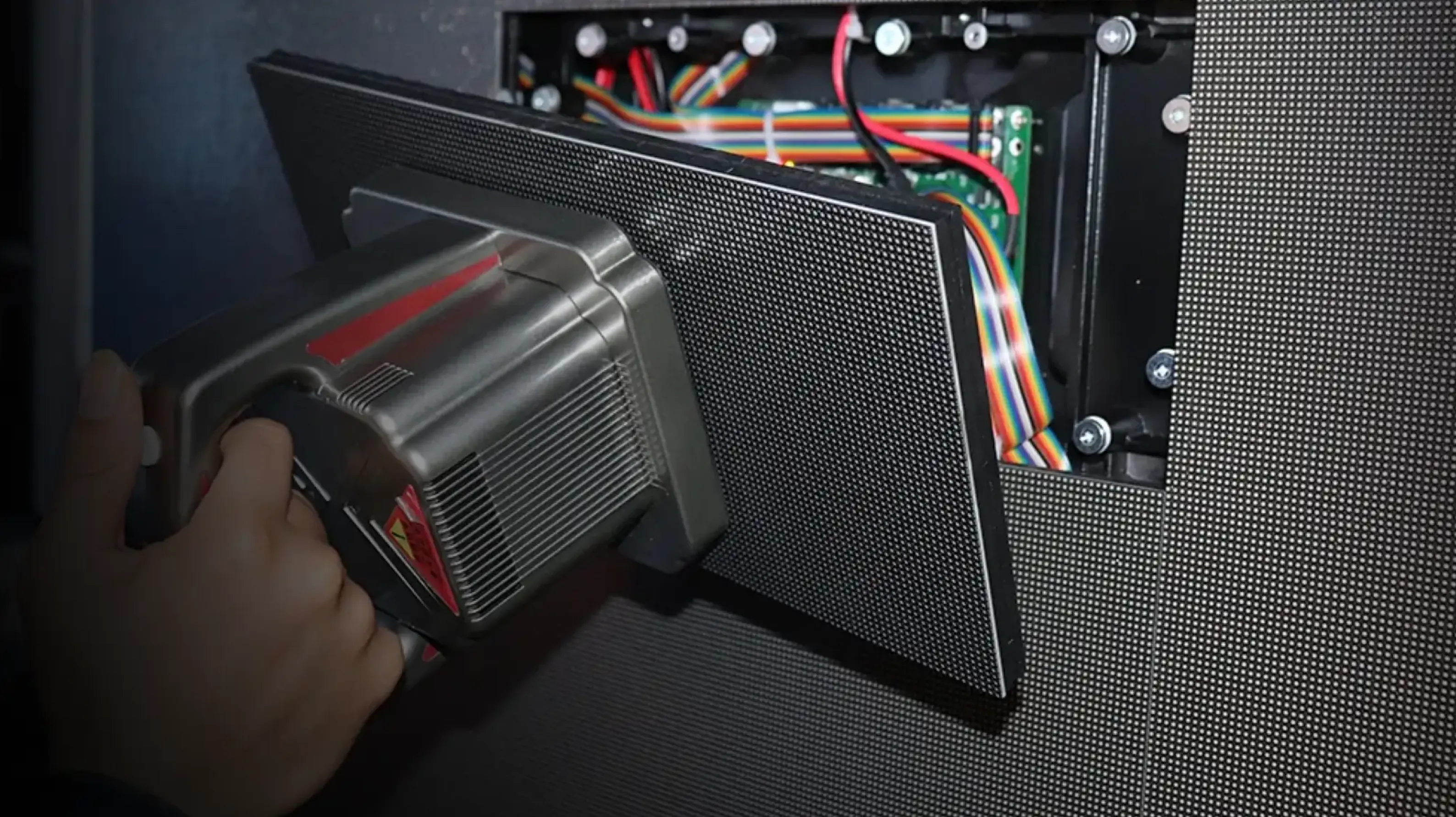
わかりやすい説明:「前面からのメンテナンス」を想像してください。完成したモザイク画のタイルを一枚交換する際、壁を壊さないで済むのと同じです。 専用の吸着工具 を使って、単一のタイル(モジュール)を前面からそのまま引き抜き、交換し、正確に元の位置に戻すだけです。壁の裏側に行く必要はありません。
磁気設計により、取り外しが素早く簡単に行え、モジュールはわずかな力でパチンと元の位置に固定され、取り付け面が平坦かつ正確であることを保証します。
2. 前面固定ネジと回転レンチ
より大型で頑丈な 屋外用LEDディスプレイ, では、前面からのメンテナンスは、回転レンチを組み合わせた前面固定ネジを使用して行われることがよくあります。
ここでは、各LEDモジュールが前面から専用の回しレンチで外すことのできる特殊なネジで固定されています。この設計により、厳しい気象条件下でも各モジュールが安全で安定した状態を保ちます。
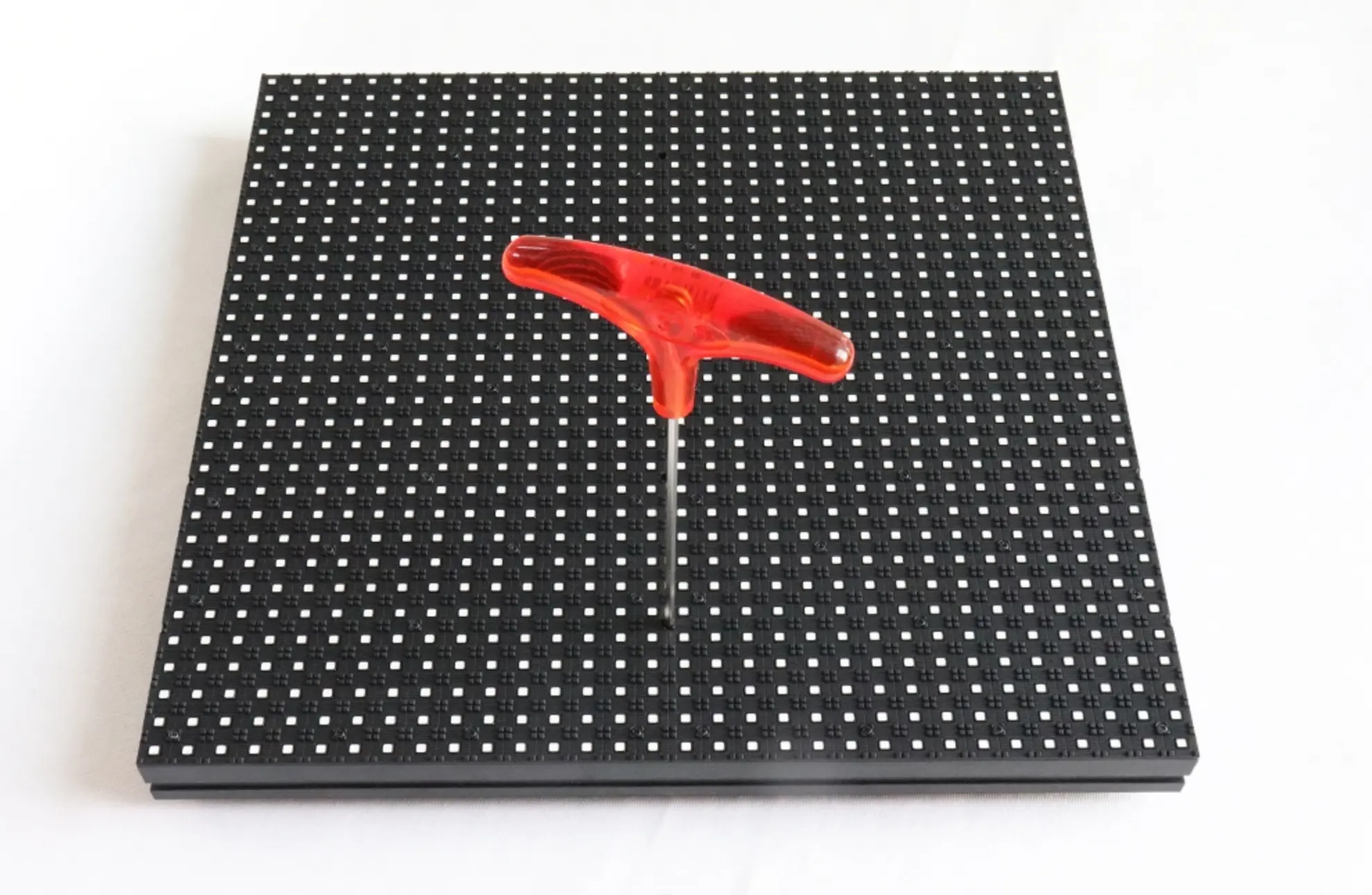
メンテナンスが必要な場合は、技術者が前面からネジにアクセスし、回しレンチで緩めて故障したモジュールを外し、修理または交換を行います。このアプローチにより、風や振動、その他の環境的なストレスに晒される屋外環境において、表示装置のセキュリティと安定性をさらに高めます。
両方の前面保守メソッドは、背面へのアクセスの必要性を解消し、最小限の支障で効率的なメンテナンスを提供します。これにより、LEDディスプレイの設置場所と設置方法に関する新たな可能性が拓かれます。
前面保守が最も適している場所:
- 隙間の少ない壁面密着設置(例: テレビスタジオ, 教会, ホテル 小売店の目立つ壁面).
- ガラスカーテンウォールなど、背面アクセスが不可能な埋め込み型または凹型応用。
- Complex shapes—curved, cylindrical, or custom architectural integrations—where a “back side” is either inaccessible or doesn’t exist in a usable way.
- Spaces where visual integration and architectural cleanliness are prioritized, and opening a rear maintenance room or corridor would compromise the design.
In short, front service is your go-to solution when the screen must live up close and personal with the built environment, where back access is impractical and every millimeter of depth matters.
背面保守とは?
Rear service is the traditional LED maintenance approach.
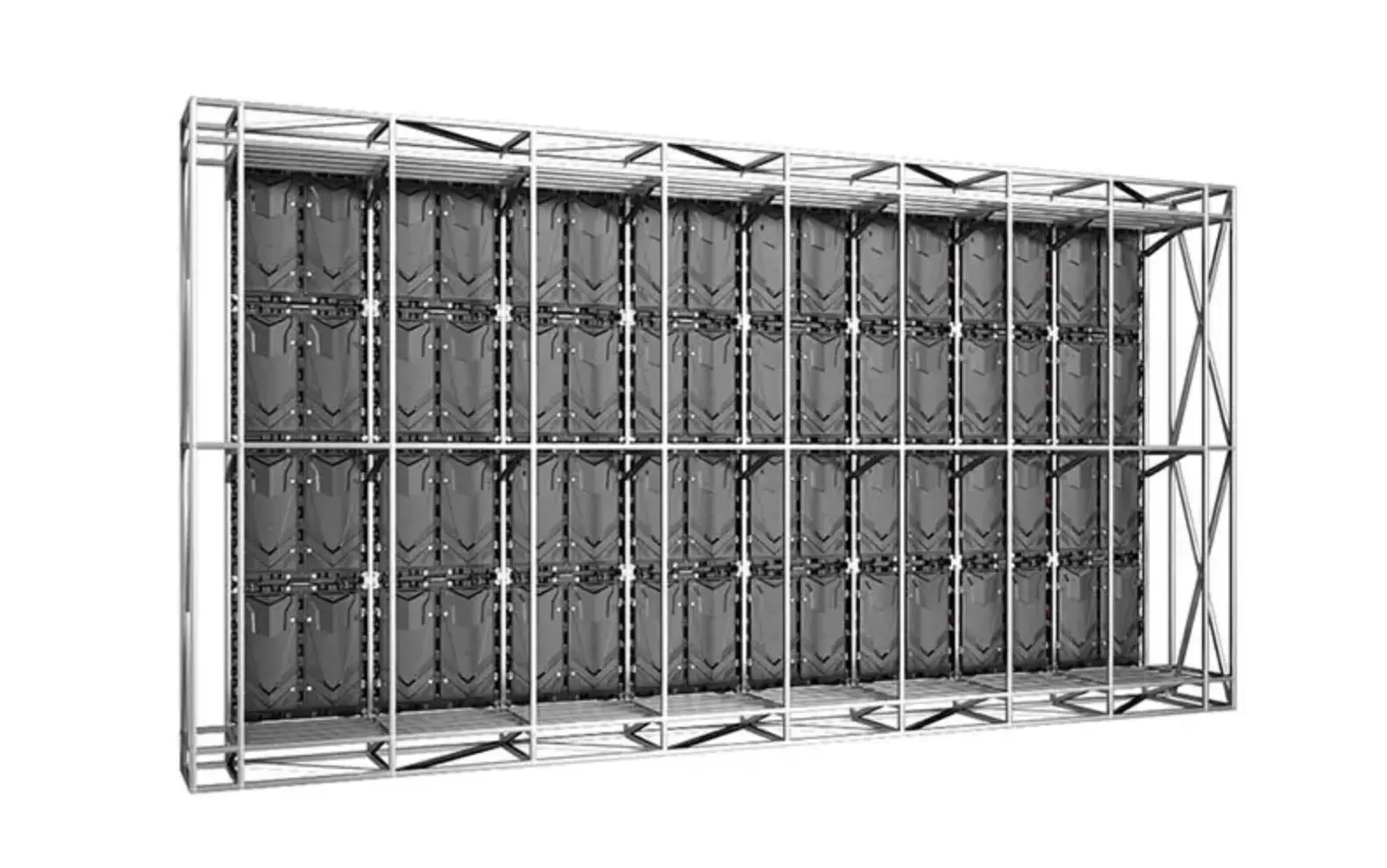
It assumes that technicians will access and service the screen from behind, which requires a dedicated maintenance corridor or backstage area large enough for safe movement and work.
Typical rear clearance requirements are on the order of 60–80 cm (or more), depending on the structure and local safety practices.
Technicians enter this space to unbolt and remove modules, power supplies, or receiving cards from the rear of cabinets. Cabinets are secured via mechanical fasteners—screws or bolts—onto robust steel frames that are designed to handle weight, wind loads (outdoors), and long-term structural stability.
Where rear service fits best:
- Large 屋外大型看板 専用鉄骨構造と安全な後方アクセスが確保できる屋上。
- 制御センター、放送用ウォール、および計画的なメンテナンス通路を確保できる施設。
- 建築的スペースが十分に確保され、後方の部屋や通路の実現が可能かつ安全な屋内設置環境。
建築的スペースを確保でき、従来の設置方法の安定性や慣れ親しんだ信頼性を重視する場合、後方サービスは依然として論理的かつコストパフォーマンスに優れた選択肢です。
前面保守と背面保守の違い
中核的な違いを明確にするための詳細な比較を以下に示します。
| 機能 | 前面メンテナンス対応 | 後方メンテナンス対応 |
| メンテナンス方向 | ディスプレイ正面から | ディスプレイの背面から |
| 必要なスペース | 背面のスペースは不要。壁面取付が可能 | メンテナンスのために背面アクセスまたは通路が必要です |
| 典型シナリオ | 屋内(壁、狭い空間);创意的な形状 | 大型屋外スクリーン;背面アクセスが可能な部屋 |
| モジュール取り外し方法 | マグネット式マウンティングネジ、またはレンチで固定する前面ボルト | 従来のネジ/ボルトを使用して背面からモジュールを外す |
| 設置の複雑さ | 通常は簡単。モジュールに直接アクセス可能 | 構造や廊下の計画が必要です |
| 美観との調和 | フラッシュまたは埋め込み式設置に対応 | 目立つフレームまたはアクセススペースの確保が必要な場合が多い |
| メンテナンスの速度 | 高速(前面吸引工具、ラチェットレンチ) | 低速。故障したモジュールに到達するまでの手順が多い |
| コスト | Slightly higher due to specialized components | Often lower product cost, higher structure cost |
| Suitability | Best for limited or zero rear access locations | Ideal where rear access is feasible and safe |
| Environmental Security | Magnetic/locking system, front screws (outdoor) | Traditional bolts, more robust against tampering |
| Heat Dissipation | Needs careful design for airflow (wall flush) | Easier rear ventilation management |
前面メンテナンスと背面メンテナンスの長所と短所
Pros and Cons of Front Service
| Pros | Cons |
| Allows maintenance from the front, no rear access needed | Usually higher initial product cost due to special design |
| Ideal for wall-mounted, embedded, or tight spaces | Magnetic modules may be less robust against vibration (indoors only) |
| Faster and easier module replacement; less downtime | Precision installation needed to ensure flat, seamless surface |
| クリエイティブな形状とフラッシュ(面一)取付に対応 | 壁面フラッシュ取付では、放熱設計に十分な配慮が必要です |
| 建物構造や既存のデザインへの干渉が少ない | 屋外用の場合:前面ネジの取り外し・取付に時間がかかる可能性があります |
| モジュールの交換には通常、1人の技術者のみで対応可能 | 専用工具(吸盤、ロータリーレンチ等)が必要です |
背面サービス方式のメリットとデメリット
| Pros | Cons |
| 堅牢な構造で安定性に優れ、風や振動への耐性が高い | スクリーン背面にメンテナンス用の通路やスペースが必要です |
| 大画面や屋外用では、製品およびキャビネットのコストパフォーマンスが高い | 壁面密着型や狭い設置環境には不向きです |
| 従来のネジ/ボルトによる固定は確実で、扱いに慣れている方が多い固定方法です | モジュールの交換にはより多くの時間と手間がかかります |
| 背面の通風により優れた放熱効果が得られます | メンテナンスにより、バックステージでの作業に支障が生じる可能性があります |
| 大規模または屋外のLEDスクリーンは、管理・保守がより容易です | 背面の安全な作業には、複数の技術者の協力が必要な場合があります |
| 堅牢な環境に適したシンプルな構造です | 創造的な形状やデザインではアクセスがより困難になります |
LEDディスプレイに最適なメンテナンス方法の選び方
以上で、フロントサービスとリアサービスのメリット・デメリットを学びました。では、次のプロジェクトに最適なサービスタイプはどのように選べばよいのでしょうか? LEDディスプレイ?
Use this simple decision path to narrow your choice quickly:
1. Do you have usable rear space?
- If “no,” choose front service. The absence of a safe, accessible corridor effectively mandates it.
- If “yes,” both options remain viable; proceed to functional priorities.
2. What matters most in your environment?
- Maximum structural stability and lowest initial product cost: Favor rear service, especially in large outdoor or industrial contexts.
- Minimal downtime and fast, uncomplicated maintenance: Favor front service; one-person module swaps from the front can be a decisive operational advantage.
- Architectural integration and aesthetics: Favor front service for wall-flush, recessed, or creative shapes.
2. Budget alignment
- Front service typically carries a 5–10% product premium. If your budget is tight and space permits, rear service can free funds for pixel pitch, content systems, or other value-adds.
- If lifecycle costs and operational continuity are paramount, front service may offset its premium via lower maintenance labor and reduced disruption over 5–8 years.
Scenario-based guidance:
- Retail flagships and hospitality lobbies: Front service—space is at a premium and aesthetics drive value.
- Control rooms and broadcast walls: Either can work; if a rear corridor is planned, rear service is viable; if fast front access and minimal disruption matter most, front service is attractive.
- DOOH billboards and rooftops: Rear service—robust structures, proven stability, and easy airflow typically win.
- Creative shapes (cylinders, curves, spheres, cubes, embedded façades): Front service—front access is often the only practical approach.
結論
In this post, we examined the difference between front service and rear service for LED displays through their core concepts and features. We showed how space constraints, maintenance speed, aesthetics, and long-term operations shape the choice more than any single spec number. We compared their Advantages and disadvantages, highlighted where each one thrives, and provided selection guidance to reduce risk and guesswork.
If you still have questions, want help applying this framework to your specific site, or need a complete analysis, contact us. We’ll help you match the right maintenance approach to your environment so your LED display delivers the performance, reliability, and visual impact you expect—on day one and for years to come.
For documented maintenance examples, review the ES Series front/rear service options, the LED Touch All-in-one Machine full-front maintenance design, and the Philips showroom project.
関連記事